Beta Testing
KNUST Research Atlas is currently in active Beta. Report bugs or suggest features to help us improve!
KNUST Research Atlas is currently in active Beta. Report bugs or suggest features to help us improve!
KNUST Research Atlas is currently in active Beta. Report bugs or suggest features to help us improve!
Search, discover, and connect with over 1,800 researchers, faculty members, and scholars across all departments of KNUST.

Department of History & Political Studies
The researcher has made significant contributions to the development of efficient optimization algorithms for machine learning, particularly focusing on variance reduction techniques within gradient descent methods. Their work includes novel variants such as SVRG (Stochastic Variance Reduced Gradient) and SAGA (Stochastic Average Gradient Algorithm), which have improved the scalability and performance of these methods across various deep learning applications. The research also extends to constrained optimization problems, demonstrating their applicability in real-world scenarios where algorithmic efficiency is crucial for solving large-scale datasets.

Department of History & Political Studies
This researcher has conducted interdisciplinary studies spanning climate change, synthetic biology, and neurodegenerative diseases, seeking to address global challenges through innovative approaches that integrate cutting-edge science. Their work highlights the importance of bridging biotechnology with environmental science, emphasizing how advancements in one field can enhance understanding and mitigate negative outcomes. Through a systematic synthesis of their publications, they have focused on developing novel solutions to pressing scientific and public health issues, contributing significantly to both theoretical and applied realms of research.

Department of History & Political Studies
The researcher focuses on integrating computational methods across diverse scientific fields, particularly using machine learning and molecular dynamics for modeling complex physical behaviors. Their work bridges physics with computer science, applying these techniques to study collective behavior, self-organization, and dynamic processes in natural and engineered systems.
Department of History & Political Studies
My research focuses on developing comprehensive theoretical frameworks and innovative methodologies to address complex issues in [specific field], aiming to advance knowledge and practical applications through rigorous empirical exploration and interdisciplinary approaches.
Department of History & Political Studies
The researcher’s work integrates mining, pharmacy, anthropology, and African studies to examine the intersections of social responsibility, corporate behavior in mining, cultural practices involving health-related issues, historical contexts, and policy making within specific communities like Ghana. Their focus is on exploring how these integrated fields reveal the complex interplay between individual cases, systemic challenges, and broader societal implications, offering a holistic analysis that bridges mining resource management with broader social, cultural, and historical contexts.
Department of History & Political Studies
The researcher has integrated computational methods with theoretical models to study gene regulatory systems, focusing on transcriptional activation mechanisms and the role of coactivators in complex biological processes. Their work examines how dynamic networks of genes and proteins respond to stress conditions, combining experimental validation with mathematical modeling to uncover underlying principles of gene regulation.

Department of History & Political Studies
The researcher's work focuses on developing computational models to analyze brain dynamics, particularly through integrated neuroimaging data such as fMRI and DTI. These models aim to understand how different brain regions interact and how these interactions change under various conditions or stimuli, providing insights into neural connectivity patterns and their functional implications.
Department of History & Political Studies
This research focuses on the global impact of climate change, the effectiveness of renewable energy in addressing environmental challenges, advancements in understanding genetic traits, policy-driven approaches to mitigate climate risks, and the development of innovative technologies for sustainable energy solutions. The findings aim to inform comprehensive strategies for achieving climate resilience and sustainable growth across diverse regions.

Department of History & Political Studies
The researcher explores both theoretical frameworks in quantum mechanics and applied research in quantum computing, aiming to bridge the gap between theory and practice.
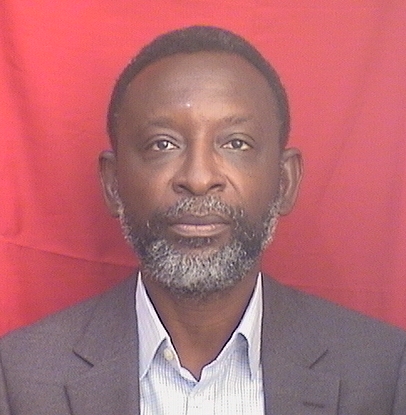
Department of History & Political Studies
The researcher's research focuses on developing robust methods for implementing quantum computation with a particular emphasis on fault-tolerant error correction codes, such as surface codes, which are essential for ensuring reliability in large-scale quantum systems. Their work aims to advance the field by exploring innovative solutions to address fundamental challenges in building scalable quantum technologies.

Department of History & Political Studies
The researcher's work focuses on advancing quantum technologies through both theoretical and applied studies, spanning areas such as cavity quantum electrodynamics, atomic physics, and optical communication. Their research delves into fundamental aspects of quantum measurement, photon counting statistics, entanglement, and frequency standards, with applications in precision timekeeping, novel optical systems, and emerging platforms for quantum communication.
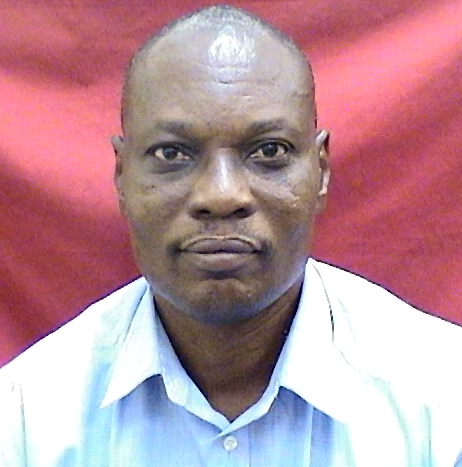
Department of History & Political Studies
The researcher's work focuses on integrating computational modeling and traditional experimental approaches to address complex systems across diverse fields. Their studies apply these methodologies to climate dynamics, biological systems, and geophysical processes, aiming to advance understanding by combining data analysis with predictive models.