Beta Testing
KNUST Research Atlas is currently in active Beta. Report bugs or suggest features to help us improve!
KNUST Research Atlas is currently in active Beta. Report bugs or suggest features to help us improve!
KNUST Research Atlas is currently in active Beta. Report bugs or suggest features to help us improve!
Search, discover, and connect with over 1,800 researchers, faculty members, and scholars across all departments of KNUST.

Department of Geomatic Engineering
The researcher's work focuses on applying advanced numerical modeling techniques to study complex geomechanical processes and the structure of the Earth's interior. By combining computational methods with field observations, the researcher aims to unravel mechanisms that govern stress redistribution in the Earth's crust and mantle, contributing significantly to our understanding of how energy distributes within planetary interiors.
Department of Geomatic Engineering
This researcher investigates multi-organizational collaboration and innovation in AI technologies while exploring their ethical, policy, and social dimensions, emphasizing the need to address equity and diversity issues within these intersections.
Department of Geomatic Engineering
The researcher's work integrates multiple disciplines, focusing on enhancing space and time-related measurements, improving environmental monitoring, advancing energy solutions forGHana, and ensuring reliable data systems. Their research encompasses advancements in satellite navigation techniques, atmospheric phenomena studies, weather modeling, and energy planning, addressing both natural and human impacts on the environment.
Department of Geomatic Engineering
This researcher has conducted extensive studies on the degradation of biodegradable polymers within soil systems, with a focus on understanding the underlying biological and mechanistic processes that govern the decomposition of organic matter. Their work encompasses the development of novel models for predicting and validating biodegradation pathways, exploring the ecological impacts of climate change on soil organic matter turnover, and investigating the roles of microbial communities in mediating soil degradation mechanisms. Additionally, their research delves into the intricate interplay between polymerization reactions and decomposition processes, aiming to uncover fundamental principles that govern soil organic matter storage and transformation. Through these investigations, they have significantly advanced our understanding of soil degradation dynamics, providing valuable insights for both environmental management and sustainable agricultural practices.
Department of Geomatic Engineering
The researcher applies geospatial technologies to address complex challenges across multiple scientific domains, including land rights, mineral processing techniques, ecosystem services from land use changes, infrastructure maintenance, sustainable urban development, water quality modeling, social impact assessments, participatory GIS in land adjudication processes, and collaborations in global sustainability initiatives.

Department of Geomatic Engineering
The researcher has a strong interdisciplinary focus, integrating theoretical physics with observational cosmology to study fundamental aspects of the universe's expansion. Their work employs modified gravity models within a theoretical framework to explain dark energy, which drives cosmic acceleration. They leverage large-scale surveys like Baryon Acoustic Oscillations (BAO) and weak gravitational lensing to analyze datasets for critical parameters in cosmology, examining how these tools constrain equations of state and dynamics of dark energy across various cosmic eras. By combining analytical methods with statistical analysis, they contribute significantly to our understanding of dark matter and the large-scale structure of space-time, offering insights into the fabric of the cosmos through a blend of theoretical modeling and observational data.
Department of Geomatic Engineering
The researcher focuses on evaluating water quality and pollution assessment within physical sciences, particularly using geographic information systems (GIS) and remote sensing techniques to analyze water quality in critical water bodies like the Birim River in Ghana. Their work integrates spatial data analysis with environmental monitoring to identify and quantify pollutants contributing to water pollution challenges in the region.
Department of Geomatic Engineering
The researcher focuses on developing GNSS positioning software tailored for applications in the Ghana Survey and Mapping Division, aiming to improve surveying accuracy through advanced GNSS technology.
Department of Geomatic Engineering
The researcher's work focuses on advancing physical sciences through innovative use of satellite technology, particularlyGNSS positioning with considerations of interference, which impacts geodetic measurements. Their research explores the practical applications of GNSS in geophysics and life sciences, while also examining its role in smart city technologies to enhance infrastructure and urban planning.
Department of Geomatic Engineering
The researcher's work integrates physical and social dimensions of Ghana's geography to advance understanding in land use, ecosystems, urban development, and environmental services. Their research spans themes from land cover dynamics and ecosystem services using satellite remote sensing, gender aspects of urban development in suburban cities, geophysical gravity studies for region-specific insights, and historical cartography for cultural preservation. The study emphasizes innovative integration of physical and social sciences to address sustainable practices and ecosystem functions, with particular focus on ecological solutions in urban settings, historical land uses for cultural preservation, and precise geophysical data for environmental monitoring.
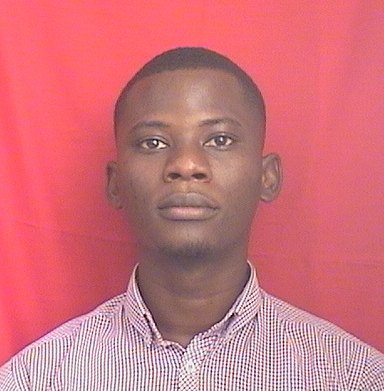
Department of Geomatic Engineering
The researcher focuses on two primary areas of research: the study of land use and ecosystem services in physical sciences, particularly examining how land is utilized for various purposes and its ecological impact; and parasitic diseases research and treatment in health sciences, focusing on understanding disease distribution patterns and developing strategies to control them.
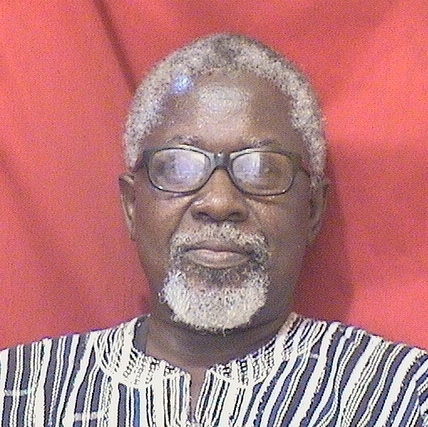
Department of Geomatic Engineering
The researcher's work is centered around developing innovative statistical methodologies for bioinformatics problems that bridge machine learning, optimization, and geometry in high-dimensional data analysis. Their contributions include computationally efficient algorithms for handling complex biological networks, regularization techniques to improve model performance, and applications of geometric deep learning to analyze biological structures and dynamics.